
Power, Warmth, and Protection for Every Season Ahead
Every season places its own demands on a home. Summer pushes cooling equipment and wiring to their limits as air conditioners, fans, and pool pumps run for hours. Autumn brings falling leaves, early storms, and the first fires of the year. Winter tests every heating component, every seal, and every flue, while spring delivers heavy rain, renewed insect activity, and the damage left behind by months of freezing and thawing. A home that handles one season well can still struggle with the next if its systems are not prepared for the full cycle.
Planning for every season ahead means treating power, warmth, and protection as connected priorities. Safe, capable electrical service supports heating and cooling equipment, lighting, and appliances through peak demand. Reliable heating and properly vented combustion keep the household warm and safe in winter. A tight shell, healthy landscape, and well-maintained outdoor spaces protect the structure from storms and pests throughout the year. When these elements are upgraded and maintained together, the home moves from one season to the next without surprises, and the household enjoys steady comfort no matter what the weather brings.
Sizing Year-Round Equipment and Sealing Leaky Duct Joints

Heating and cooling equipment works hardest at the extremes of summer and winter, and both its size and its delivery system determine how well it handles those peaks. Oversized equipment short-cycles, wasting energy and leaving rooms clammy in summer and drafty in winter. Undersized equipment runs constantly and still falls behind on the hottest and coldest days. Even well-sized systems lose a significant share of their output through leaky ducts in attics and crawlspaces, where disconnected joints and unsealed seams dump conditioned air into unconditioned space.
Experienced HVAC contractors begin with a Manual J load calculation that reflects insulation levels, window performance, air leakage, and orientation, then select equipment that matches both heating and cooling loads. Heat pumps, dual-fuel systems, or high-efficiency furnaces paired with matched cooling equipment are chosen based on climate and fuel availability. Ducts are tested for leakage, and joints, seams, and boot connections are sealed with mastic or UL-181 foil tape. Attic ducts are insulated, disconnected runs are reattached, and airflow is balanced so every room stays comfortable year-round.
Adding Dedicated Circuits and Installing Ground-Fault Outlets
Seasonal demands place unique stress on a home’s wiring. Space heaters, holiday lighting, window air conditioners, pool pumps, and outdoor equipment all draw significant current, often on circuits that also serve other rooms. Overloaded circuits trip breakers, overheat conductors, and create fire risks, especially when extension cords are used to reach distant outlets. Outdoor receptacles and those in kitchens, wet rooms, laundry areas, garages, and basements expose people to shock risk whenever water and electricity meet.
A licensed electrician begins with a load evaluation to identify overloaded circuits and plan new dedicated lines for high-demand appliances, heating and cooling equipment, workshops, and outdoor living areas. New circuits are run with properly sized conductors and breakers, and GFCI protection is installed through receptacles or breakers in all required locations. Outdoor outlets receive weather-resistant, tamper-resistant devices in raised boxes with in-use covers, ensuring safe, reliable power through every season.
Felling Storm-Damaged Trunks and Clearing Hazardous Limbs
Each season brings weather that tests mature specimens. Summer thunderstorms deliver sudden gusts, autumn hurricanes and nor’easters soak the soil, and winter ice adds tremendous weight to branches. Trunks with internal decay or weak unions can split, and saturated roots can lose their grip entirely. After a storm, hanging limbs caught in the canopy, cracked leaders, and partially uprooted specimens create hazards that can fall without warning onto the house, vehicles, or people below.
Professional tree removals begin with an arborist’s assessment of storm damage, root plate movement, and nearby targets, with utilities contacted when lines are involved. Hanging limbs are carefully rigged and lowered rather than dropped, and damaged trunks are dismantled in sections using ropes, friction devices, or cranes. Stumps are ground below grade, debris is chipped and hauled away, and remaining specimens are inspected for hidden cracks or decay that could fail in the next storm. Corrective pruning of nearby canopies can also reduce wind resistance and lower the risk of future breakage.
Crafting Tailored Storage and Fitting Soft-Close Hardware

Seasonal living brings seasonal clutter. Holiday decorations, winter gear, outdoor equipment, and pantry supplies compete for space, and storage designed around standard sizes rarely fits the way a household actually lives. Builder-grade boxes made from particleboard sag under heavy loads and swell when exposed to moisture, while basic hinges and slides loosen, sag, or fail. Gaps along uneven walls and awkward corners waste valuable space.
A skilled custom cabinet company builds storage to the exact dimensions of each room, using furniture-grade plywood boxes, dovetail drawers, and durable catalyzed finishes that resist moisture and wear. Designs can include tall pantry units, deep drawers for cookware, mudroom lockers for coats and boots, and built-ins for seasonal items. Full-extension soft-close slides and adjustable soft-close hinges keep drawers and doors aligned and quiet, while interior organizers make every item easy to find. Integrated lighting and pull-out baskets further simplify seasonal swaps.
Brushing Creosote Buildup and Capping Open Flues
The first cool evenings of autumn often bring the first fires of the season, and with them the risks that accumulated over the previous winter. Every fire leaves soot and creosote on the walls of the flue, and over time those deposits harden into a glazed, highly flammable layer. Birds, squirrels, and raccoons build nests in open flues over the summer, blocking draft and pushing smoke and carbon monoxide back into the living space. Rain entering an uncapped flue mixes with soot to form acidic sludge that corrodes dampers and liners.
A certified chimney sweep begins with a camera inspection to assess deposit levels, liner condition, and any blockages. Soot and creosote are removed with rotary brushes and rods sized to the flue, while glazed deposits are treated with chemical modifiers before removal. Nests and debris are cleared, the smoke shelf and damper are cleaned and tested, and a stainless steel cap with spark-arrestor mesh is installed to keep rain, animals, and debris out while preventing embers from landing on the shingles.
Inspecting Furnace Exchangers and Replacing Faulty Igniters
Gas heating equipment sits idle for months before being called on during the first cold snap. Over that time, dust collects on burners, flame sensors oxidize, and hot surface igniters become brittle. When ignition fails, the system cycles repeatedly or refuses to run, often on the coldest night. More serious is a cracked heat exchanger, caused by years of heating and cooling cycles and restricted airflow, which can allow carbon monoxide to enter the supply air.
A qualified heating contractor begins each season with a thorough inspection, using a camera to examine the heat exchanger for cracks and running a combustion analysis to measure carbon monoxide, oxygen, and flue temperature. Cracked or weak igniters are replaced with durable silicon nitride models, flame sensors are cleaned or replaced, and burners are cleaned and adjusted. Gas pressure is set with a manometer, filters and blower components are cleaned, and carbon monoxide alarms are tested on every level of the home. Scheduling this visit before the first cold snap avoids the long waits that come once demand peaks.
Locating Hidden Colonies and Sealing Eave Entry Points

Stinging insects begin building nests in spring and grow their colonies through summer, reaching peak size and aggression by late summer and early fall. Paper wasps hang nests under eaves, porch ceilings, and deck railings, while yellowjackets often nest in wall voids, attic spaces, and underground cavities. Gaps in soffits, damaged vent screens, and openings around utility penetrations give them access to protected spaces inside the structure, where colonies can number in the thousands.
Safe wasp nest removal begins with identifying the species and locating every active nest, including those hidden inside walls, soffits, and attics. Technicians wearing protective gear treat nests with targeted dusts or foams, often in the early morning or evening when insects are less active, then remove the nest once activity stops. Entry points are sealed with screening, metal flashing, and sealant to prevent new colonies from returning, and damaged soffit and vent screens are replaced. Follow-up checks in early spring catch new queens before they establish fresh colonies.
Designing Backyard Retreats and Building Reinforced Shells
A backyard swim area extends outdoor living well beyond the summer months when it is designed for the site and built to last. Poor placement leads to shaded, cold water, leaf-filled basins, and runoff that carries debris into the water. Below grade, expansive soils, groundwater, and poorly compacted fill exert pressure that can crack shells, cause leaks, and undermine surrounding decks. Seasonal freeze-thaw cycles add further stress to coping, tile, and plumbing.
Experienced custom pool contractors begin with a site survey, soil report, and design that considers sun exposure, drainage, privacy, and how the space connects to the house and patio. Engineered plans specify shell thickness and steel reinforcement, and crews tie rebar in a tight grid before applying concrete pneumatically and curing it slowly. Plumbing is pressure-tested, hydrostatic relief valves are installed, and heaters or heat pumps can extend the swimming season into spring and fall. Safety barriers, alarms, and self-latching gates complete the installation, while a properly fitted winter cover protects the water and equipment during the off-season.
Replacing Lifted Shingles and Renewing Valley Flashing
Seasonal weather takes a steady toll on shingles and flashing. Summer heat softens asphalt and dries out sealants, autumn winds lift tabs and break their adhesive bonds, and winter ice and snow load valleys and edges. Valleys carry concentrated water from two slopes, and when their flashing corrodes or shifts, water reaches the decking. Lifted shingles expose nail heads and underlayment, allowing leaks that rot sheathing and soak insulation.
A trusted local roofing contractor inspects the surface before and after each season, documenting lifted, creased, and missing shingles. Damaged shingles are replaced with matching material fastened with ring-shank nails and hand-sealed in high-wind areas. Worn valley flashing is removed, ice-and-water membrane is applied along the full length of the channel, and new W-style metal flashing or properly woven shingles are installed. Exposed fasteners are sealed, and attic ventilation is checked so the deck stays dry through every season.
Upgrading Outdated Breaker Boxes and Adding Surge Protection
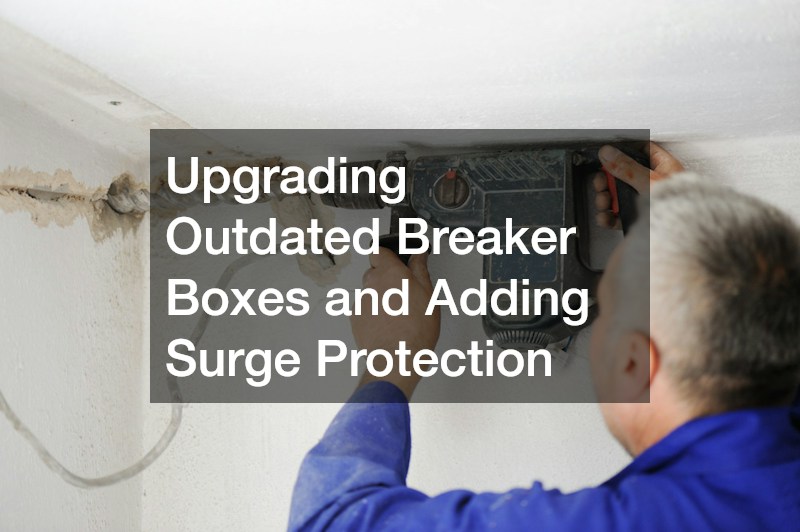
Many homes still rely on breaker boxes or fuse panels installed decades ago. These older units often lack capacity for modern loads, and some legacy brands have breakers that may fail to trip during overloads. Loose connections and corroded bus bars generate heat, while seasonal storms and utility switching send voltage spikes through the wiring that degrade appliances, electronics, and heating and cooling controls over time.
Reliable local electrical panel service begins with a load calculation and thermal imaging scan to identify overloaded circuits and hot connections. Outdated breaker boxes are replaced with modern panels, often upgraded to 200 amps with a new meter base, and circuits are rebalanced to distribute loads evenly. AFCI and GFCI protection is added where required, and a whole-home surge protective device is installed at the panel to intercept damaging spikes. Grounding and bonding are verified to ensure the system performs safely. A permit and final inspection confirm the upgraded service meets current code.
A home prepared for every season ahead is one where power, warmth, and protection work together. Properly sized heating and cooling equipment, safe wiring, and modern panels keep the household comfortable and powered through peak demand. Clean flues and well-maintained heating equipment provide safe warmth when temperatures drop. Healthy landscaping, sound shingles, sealed eaves, and well-built outdoor spaces protect the structure from storms and insects all year long.
Staying ahead of the seasons requires a simple but consistent routine. Spring and fall heating and cooling service, annual flue sweeping, electrical evaluations, landscape assessments after major storms, and seasonal inspections of shingles and eaves catch problems before they become emergencies. Upgrades such as surge protection, dedicated circuits, and tailored storage improve safety and convenience throughout the year.
The reward is a home that transitions smoothly from one season to the next. Rooms stay comfortable, systems run reliably, outdoor spaces remain inviting, and the structure holds its value. With power, warmth, and protection in place, the household can focus on enjoying every season rather than worrying about what might fail next.

